All Your Operations Data. Now It Answers Back.
One portal for every system. One assistant that reads all of it. Ask the way you would ask a coworker, and get an answer with the vehicles, values, and timing behind it.
The Answer Already Exists. It Is Just Scattered.
Deciding which buses are ready for tomorrow means opening CAD/AVL, then maintenance, then inspections, then calling the yard to confirm. By the time the picture is assembled, it has already changed.
Four Logins for One Question
Every routine decision starts with assembling the same picture by hand, from systems that were never designed to talk to each other.
Answers That Arrive Too Late
State of charge, shift end times, and hold status all move during the day. An answer assembled over twenty minutes is already out of date.
Knowledge Locked in People
The person who knows which screen to check and how to read it is the bottleneck, and the operation slows down whenever they are unavailable.
How Ops Assistant Works
Three steps, and none of them involve replacing what you already run.
Connect the Systems You Already Own
Nothing gets ripped out
- APIs from your existing vendors
- Scheduled exports on your timetable
- Direct database reads where available
- IoT and telematics feeds from the vehicles
One View, Shaped by Role
Built around the calls each team makes
- Dispatch sees readiness and coverage
- Maintenance sees holds, faults, and parts
- Management sees trends and cost
- Everyone works from the same numbers
Ask Ops Assistant
In the language you already use
- Plain English, no query syntax
- Answers drawn from live agency records
- The vehicles and values behind every answer
- Follow-up questions keep the context
One Question, One Complete Answer
Asked to build a charging plan for the afternoon, Ops Assistant pulls in-service electric buses and the spare pool together, then returns a prioritised plan with the state of charge, shift end time, and swap-by time behind each recommendation.
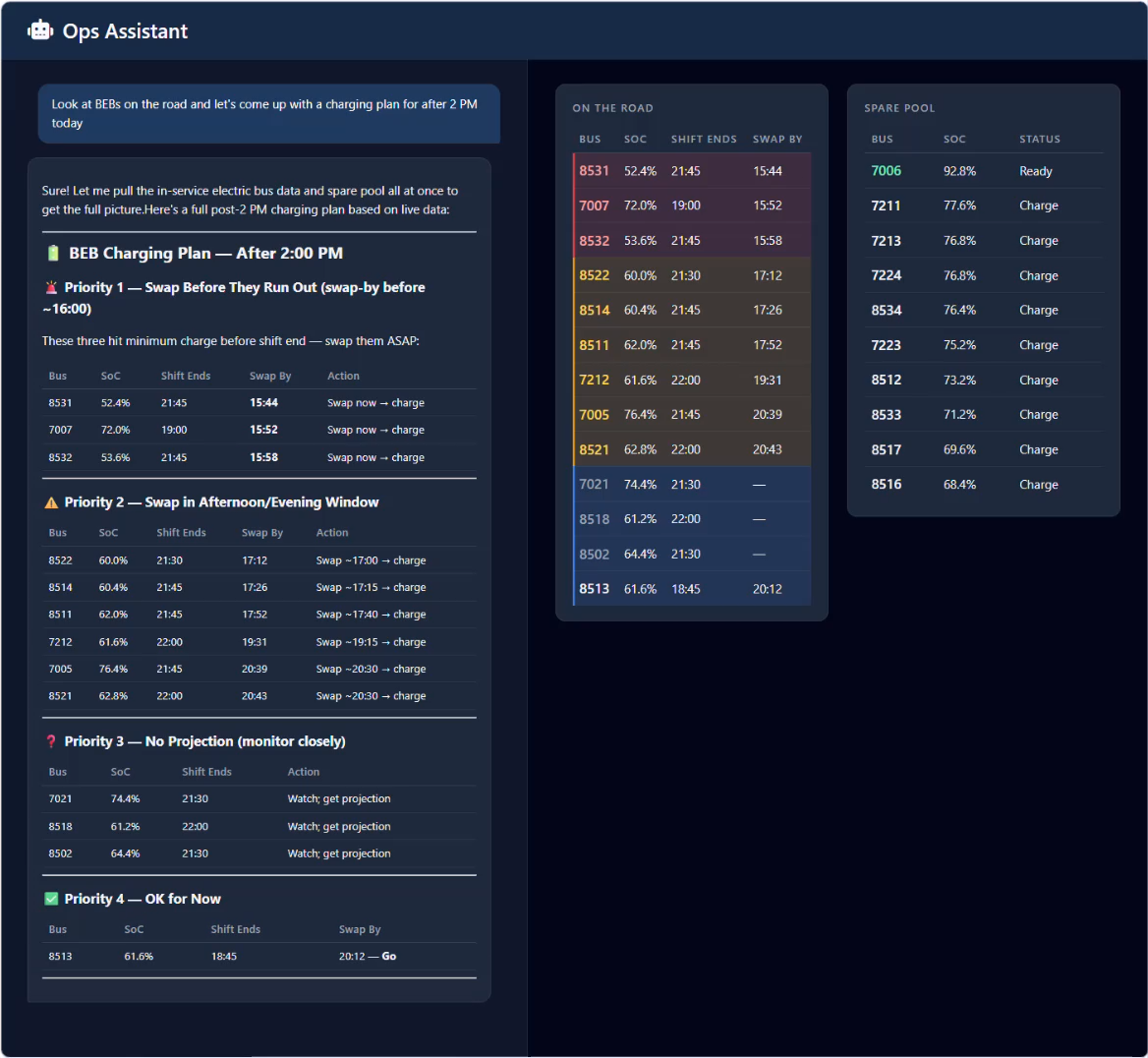
Select the image to enlarge. Sample data shown.
Why It Holds Up in an Operation
An assistant is only useful if the people making decisions can trust what it says.
Ask once
One question replaces four logins and a walk out to the yard.
Grounded in your data
Answers come from live agency records, never from a model guessing.
Keep the systems you bought
OpsPortal reads from your vendors rather than replacing them.
Decisions carry their numbers
Every recommendation shows the vehicles and values it came from.
Nobody has to learn SQL
Staff ask in the language they already use on the radio.
Sized for your agency
Start with the one system that hurts most and add the rest on your schedule.
See Ops Assistant on Your Own Data
The fastest way to judge it is to ask it something you already know the answer to. We will walk through your systems and show you what it returns.